
VINTAGE PHOTOGRAPHY
Eva
Watson-Schütze
1867 - 1935 American
Women like Eva Watson-Schutze were among thousands of women who as professional and amateur photographers sought personal, artistic, and professional fulfillment while still connected to the traditional domestic environment. These women created a positive experience for themselves in photography through an identifiable female network of women photographers, through membership in camera clubs, and in many cases, through their association with photography great Alfred Stieglitz. Theirs became an alliance between women, art, culture, and technology in a time of intense social change in the United States.
Image:
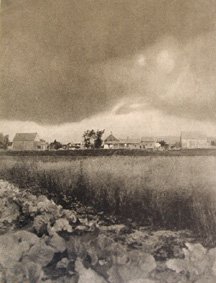
Storm
1905
Half Tone Reproduction
7-1/2 x 5-1/2 inches
Steiner’s photographs have acquired a good deal of nostalgic value. His work's content may be slightly different from what it was then to what it is now. The meanings of pictures change. It is well established, however, that the very best pictures adapt themselves to many changes in meaning. The beauty of Steiner's work though, is presumably no less affecting then, than it is today.
Image:
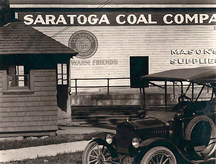
Saratoga Coal Company
1929
Gelatin Silver Print,
printed 1980 7-5/8 x 9-5/8 inches
Alfred
Stieglitz
1864 - 1946 American
Stieglitz lived three lifetimes as a photographer, each producing a body of work that was formidable and distinct from the others. Most of his early photographs were strongly influenced by aesthetic values inherited from traditional painting. Around 1910 the character of his work changed. The portraits and cityscapes of this period had a directness and immediacy that made most earlier art-motivated photography seem once removed from real experience. After the early twenties, Stieglitz's work turned more and more inward and became increasingly personal, pure, and self-contained.
Image:
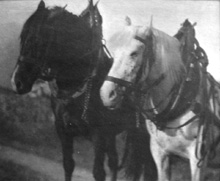
Horses
1905
Photogravure
18 x 22 inches
Izaak Walton was born in Stafford in 1593, the son of an alehouse keeper. Although for most of his life he lived in London, Worcester and Winchester, he retained a fond regard for this area. He is best remembered for writing the The Compleat Angler which was completed in 1653. It is from this 1888 publication that this collection of exquisite photogravures was taken.
Image:
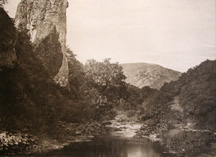
Pickering Tor - Plate XLVII
1880's
Photogravure
5 x 8 inches
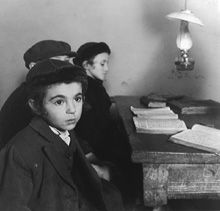
Vishniac, born in Pavlosk, near St. Petersburg, was a Russian-American biologist, photographer, linguist, art historian, and philosopher. From 1933 to 1939 he produced a photographic record of Jewish communities in Central and Western Europe. The black and white photographs featured in his series, Children of a Vanished World, are loving testimony to Vishniac's personal journey across Eastern Europe to record the lives of Jewish people in the early years of Hitler's rise to power. From 1936 to 1940, Vishniac traveled 5,000 miles to record what he, as a Jew, felt his duty to be: "to preserve--in pictures, at least--a world that might soon cease to exist."
Image:
Carpatho, Ruthenia
1938, printed later
Mounted Gelatin Silver Print
Signed, titled, and dated in pencil on mount recto
10-1/4 x 10-1/4 inches
<previous next >